



One phone call is all it takes. No malware alert. No system failure. Just a convincing voice on the other end of the line asking for quick help. For many organizations, that moment becomes the starting point of a serious security incident.
Did you know that roughly around one quarter of incoming calls in North America are unwanted spam or scam calls? This volume gives threat actors countless opportunities to reach employees who are busy, distracted, or simply trying to be helpful.
This type of attack is known as vishing, short for voice phishing. Vishing is a social engineering attack carried out over the phone, where attackers impersonate trusted individuals such as IT support, service providers, or internal teams. Rather than exploiting technical weaknesses, they exploit human behaviour. Effective vishing prevention for business focuses on reducing this human risk through awareness and verification.
Vishing and smishing attacks rely on social engineering methods, using urgency, authority, and familiarity to convince someone to act without verifying the request. These tactics succeed when organizations lack consistent vishing prevention for business controls.
How a Vishing Call Typically Unfolds
A common vishing scenario begins with a call that appears to come from IT support or a trusted vendor. The caller may claim:
- There is a security issue, a virus, or an account problem
- Immediate action is required to avoid disruption or data loss
Once urgency is established, the attacker guides the conversation toward a specific action. The request often feels reasonable in the moment, especially when the caller sounds knowledgeable and confident.
You may be asked to:
- Click a link
- Share or read out a verification code
- Provide a password
- Install software or allow remote access
Each of these actions can give an attacker the access they need to move deeper into your environment.
Common Tactic Used in Vishing Attacks
Urgency is the most common tactic. The caller creates pressure by suggesting that a delay will result in account lockouts, system downtime, or security exposure. This pressure is intentional and designed to prevent the employee from slowing down and verifying the request.
Another common tactic is impersonation combined with familiarity. Attackers often pose as IT support or a known provider and may reference specific details about the person or organization they are calling. In some cases, they already have basic information gathered from publicly available sources such as LinkedIn profiles or data available on the dark web. This prior knowledge helps the call sound more legitimate and personalized.
When urgency and familiarity are used together, the request feels credible and time sensitive, making it easier for the attacker to gain trust and influence behavior.
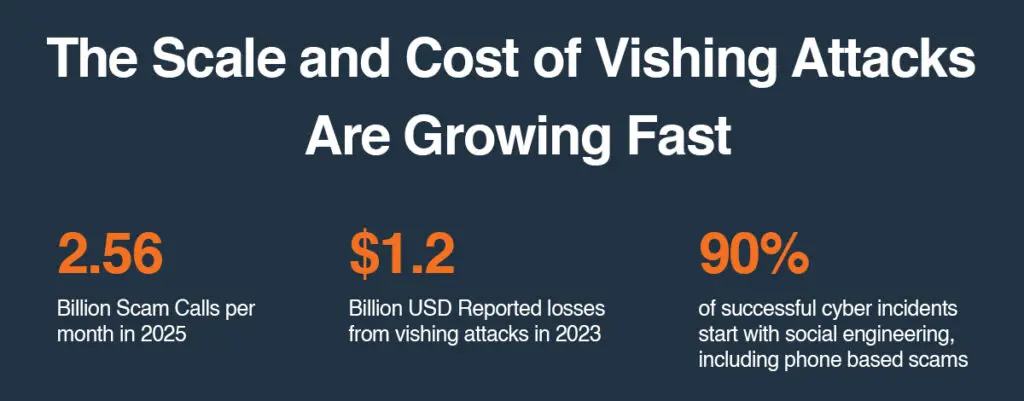
The impact of these tactics is significant. According to the FBI Internet Crime Complaint Centre, vishing caused over $1.2 billion USD in reported losses in 2023. It is worth noting that the FBI only tracks reported losses. Estimates show that billions of scam calls are made monthly in the United States, with one industry analysis reporting approximately 2.14 billion scam calls per month in 2024 and 2.56 billion per month in 2025.
How to Spot a Vishing Attack
Vishing calls are designed to sound legitimate, but there are consistent warning signs employees should be trained to recognize.
Common red flags include:
- An unexpected call claiming to be from IT or a service provider
- Pressure to act quickly without time to verify
- Requests for verification codes, passwords, or remote access
- Instructions to click a link or install software during the call
- A refusal to allow call-backs through known internal numbers
Even when the caller has accurate details about the organization or employee, that information alone does not validate the request. Any unexpected security-related call should be treated with caution until verified through established internal processes.
How to Prevent Vishing Attacks
Preventing vishing attacks requires a combination of awareness, policy, and reinforcement.
Effective prevention steps include:
- Training employees to verify unexpected calls through known internal contacts
- Establishing clear policies that passwords and verification codes are never shared over the phone
- Reinforcing that IT will never request remote access without a verified support ticket
- Encouraging employees to pause and question urgent requests
- Providing a clear and simple way to report suspicious calls
Vishing prevention is not about slowing down the business. It is about creating consistent habits that protect access, accounts, and systems.
Final Thoughts
Vishing attacks work because they target trust, routine, and urgency. They do not rely on advanced tools or technical exploits. They rely on people doing what feels helpful in the moment.
A single scam call can be the entry point to account compromise, unauthorized access, or broader security incidents. As phone-based attacks continue to scale, organizations must treat voice threats with the same level of attention as email and messaging threats.
Security awareness, clear processes, and a culture that supports verification over speed can make the difference between a blocked scam and a serious incident.