




Employees are already using AI in the workplace, whether leadership has approved it or not.
They are summarizing meetings, rewriting emails, analyzing spreadsheets, generating reports, and connecting AI tools to business systems every day. In many organizations, this is happening with little visibility, no governance framework, and no clear understanding of where sensitive data is going.
An employee pastes confidential meeting notes into a public AI chatbot to summarize action items before the end of the day. Another uses AI to search across SharePoint for old project templates and accidentally surfaces sensitive financial documents. A manager asks an AI assistant to review employee performance trends without realizing the tool is storing that information outside the organization’s visibility.
None of these situations start with malicious intent. Most employees are simply trying to work faster, reduce repetitive tasks, and save time.
In many ways, AI is delivering exactly that. But productivity without governance is where the risk begins.
What Is Shadow AI?
Shadow AI refers to the use of artificial intelligence tools outside approved organizational oversight. This often includes employees using personal AI accounts, browser extensions, meeting summarization tools, AI transcription platforms, or unauthorized automation software without IT or security review.
In many cases, employees are not acting irresponsibly. They are solving real business problems quickly. The challenge is that AI tools process, store, and interact with information differently than traditional workplace software.
When someone pastes client information into a public AI tool, uploads confidential specifications into an external system, or connects an AI assistant to corporate data sources, the organization may lose visibility into:
- Where that data is stored
- How long is it retained
- Who can access it later
- Whether it is used to train external models
According to the Netskope Cloud & Threat Report covering October 2024 to October 2025, 47% of employees using generative AI are doing so through personal, unmonitored accounts outside organizational IT visibility.
AI Is Like a Junior Employee
One useful way to think about generative AI is to treat it like a highly capable junior employee.
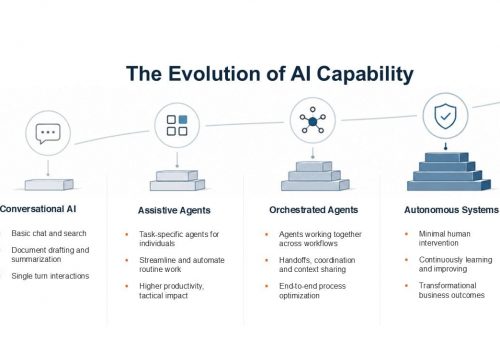
AI is fast. It can summarize documents, analyze large amounts of information, generate drafts, and automate repetitive work in seconds. But it also lacks judgment, context, and professional awareness.
Like a junior employee, AI:
- Can sound confident even when wrong
- Works quickly but does not always understand what matters most
- Requires clear instructions, or it begins guessing
- Does not understand confidentiality obligations on its own
- Uses whatever data it can access without human judgment
- Requires supervision and validation to remain defensible
This is where many organizations underestimate the risk. Employees often trust AI outputs because they sound polished and authoritative. That trust can lead to overreliance, poor decision-making, or accidental disclosure of sensitive information.
The Data Privacy Problem with the Use of AI in the Workplace in Plain Terms

The scenario illustrated above is not hypothetical. Employees routinely ask AI tools questions that contain or imply sensitive organizational data. Consider a few common examples:
- An HR manager copies performance review notes into a public AI tool to generate a termination letter
- A finance team member asks an AI chatbot to help interpret salary benchmarks after pasting in internal compensation data
- A sales employee uploads a customer list to an AI tool to generate personalized outreach
- A developer pastes proprietary source code into a public AI assistant for debugging help
In each case, the employee is solving a real problem. In each case, the organization has potentially exposed data that was never meant to leave its environment. Depending on the jurisdiction, the industry, and the nature of the data, this can trigger regulatory obligations, contractual breaches, or reputational damage.
Privacy regulations such as PIPEDA in Canada, GDPR in Europe, and HIPAA in healthcare settings impose obligations on how personal data is collected, stored, and shared. Using a public AI tool to process personal employee or customer data without appropriate data processing agreements in place likely violates these frameworks.
What a Corporate AI Policy Needs to Cover

The contrast between the two office diagrams in this blog captures the core of the policy challenge. Without controls, any question posed to an AI tool returns sensitive answers regardless of whether the person asking should have access to that information. With the right policy and technical guardrails in place, the same questions produce appropriate refusals or redirects.
A corporate AI policy should address the following:
1. Approved Tools and Platforms
Specify which AI tools employees are permitted to use and under what circumstances. Enterprise-grade versions of tools such as Microsoft Copilot, Google Workspace AI, or dedicated business tiers of AI platforms typically offer data isolation and contractual data protection that consumer-facing free versions do not. Default browser access to public AI tools should be treated as unapproved unless explicitly sanctioned.
2. Data Classification and AI Interaction Rules
Not all data carries the same risk. A policy should categorize data and clearly define what categories may be submitted to which classes of AI tools. Confidential data such as employee records, client contracts, financial data, and source code should require explicit review before any AI interaction.
3. Training and Awareness
Employees do not adopt Shadow AI out of malice. They adopt it because it works, and no one told them the risk. Regular, plain-language training that explains what data can and cannot be submitted to AI tools, and why, is essential. Training is not a one-time event. As AI tools evolve, the guidance must evolve with them.
4. Monitoring and Enforcement
Policy without enforcement is guidance at best. Organizations should implement technical controls that make it harder to paste sensitive data into unapproved tools, including data loss prevention solutions that flag or block specific data types. Browser policies that restrict access to consumer AI tools on corporate devices add an additional layer of protection.
5. Incident Response for AI-Related Data Exposure
If an employee inadvertently submits sensitive data to a public AI tool, the organization needs a clear process for assessing the exposure, notifying affected parties if required, and documenting the incident. Most organizations have data breach response plans. Few have adapted them specifically to AI-related exposures.
The Vendor and Supply Chain Dimension
AI risk does not stop at the employee. Organizations should also evaluate the AI capabilities embedded in the tools they already use. Many software vendors have added AI features to their products without making those features prominent in their changelog or contract updates.
A document management platform that introduces an AI summarization feature may, by default, send document content to a third-party AI provider. The organization may have no awareness this is happening unless they read every product update carefully. Vendor security reviews should now explicitly ask about AI capabilities, data routing, and training data practices. The same principle extends to understanding broader cybersecurity risks that AI introduces at the network level.
The Cost of Poor AI Governance
The risks are no longer theoretical.
According to IBM’s 2025 Cost of a Data Breach Report:
- 1 in 5 surveyed organizations suffered a breach directly caused by Shadow AI
- 97% of organizations reporting AI-related breaches lacked proper AI access controls at the time of the incident
- 16% of all breaches involved attackers using AI, including AI-generated phishing and deepfake impersonation attacks
The challenge is not simply external attackers. Organizations are also struggling with internal misuse, overexposure of information, and uncontrolled adoption patterns.
Getting Ahead of the Risk
AI adoption in the workplace is not a future concern. It is happening now, at scale, largely without formal oversight in most organizations. The gap between what employees are doing with AI tools and what IT and leadership know about it is widening every month.
Closing that gap does not require blocking AI entirely. It requires building a framework that gives employees access to appropriate AI tools, educates them on what data those tools can and cannot touch, and creates technical guardrails that back up that education.
Organizations that build that framework now will be better positioned to capture the productivity benefits of AI while protecting the data, relationships, and regulatory standing they have spent years building.
If your organization is at the early stages of thinking through AI governance, or if you suspect Shadow AI is already a factor in your environment, contact us today.