




We are pleased to share that Certinet Systems is now part of Convergence Networks. Learn More.

Microsoft Build 2026 – 3 Key Announcements Business Leaders Should Know

Microsoft Build 2026 kicked off on June 2nd in San Francisco, bringing together developers, technology leaders, and industry experts to showcase Microsoft’s latest innovations and vision for the future of AI.

Every year, the event offers a glimpse into where technology is heading. While Build is primarily a developer conference, this year’s announcements carry real implications for how businesses operate, spend on technology, and think about AI adoption. The overarching signal from Build 2026 is clear:

Microsoft is moving AI from a productivity assistant to something that works autonomously on your behalf

Here are the three key announcements that you should be aware of.

1. Microsoft Scout and the Rise of Autopilot Agents
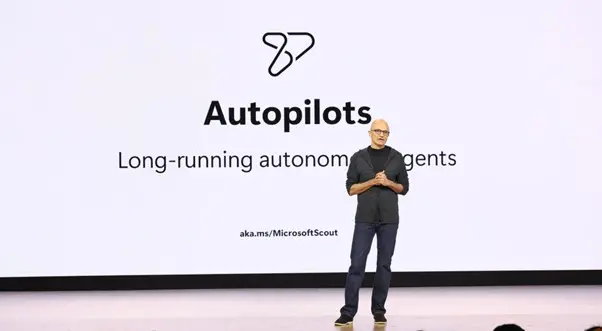
Microsoft Scout Announcement at Microsoft Build 2026

One of the most significant announcements from Build 2026 was Microsoft Scout, Microsoft’s first “Autopilot” agent.

Unlike traditional AI assistants that wait for a prompt, Scout is designed to work continuously in the background, it can monitor activities, understand context, identify actions that need attention, and execute tasks on behalf of users.

Imagine an AI agent that:

  • Monitors project deadlines and schedules meetings automatically
  • Tracks customer requests across Teams and Outlook
  • Identifies emerging issues and notifies the right stakeholders
  • Performs routine administrative work without manual intervention

Microsoft describes Scout as an always-on agent that operates across Teams, Outlook, SharePoint, OneDrive, and other Microsoft 365 services.

While the technology is still in its early stages, the direction is clear. AI is moving beyond helping employees complete tasks. It is beginning to take ownership of specific workflows.

Why Business Leaders Should Care

The organizations that gain the most value from AI over the next several years may not be those using chatbots most effectively. They may be the ones who successfully identify repeatable business processes that can be delegated to trusted AI agents.

Now is a good time for business leaders to start thinking about which day-to-day processes could eventually be handled by AI agents and what guardrails need to be in place before that happens,” said Adam Crate, Director of Strategic Services at Convergence Networks. “The organizations that take the time to prepare today will be much better positioned to take advantage of AI’s benefits while keeping security, compliance, and risk management front and centre.”

2. Work IQ Opens the Door to Context-Aware Business AI

Work IQ is Microsoft’s organizational intelligence layer that helps AI understand how work happens inside a company. It connects information from across Microsoft 365, including emails, documents, meetings, chats, files, projects, and business relationships, to create a richer understanding of people, teams, and workflows.

Microsoft has already been using Work IQ to power Microsoft 365 Copilot’s understanding of organizational context. At Build 2026, the company announced the Work IQ API, which allows developers and organizations to build custom AI solutions that can leverage that same contextual understanding.

This is a significant development. As Elijah Straight, Member of Technical Staff at Microsoft, put it:

“Agents are only as good as the context you give them.”

That statement captures exactly why this matters. Historically, organizations have struggled to help AI understand how their businesses actually operate. Generic AI models can answer questions, but they often lack the organizational knowledge required to provide meaningful business value. The Work IQ API is Microsoft’s answer to that gap.

Why Business Leaders Should Care

The next wave of AI value will come from systems that understand company-specific context, not just general knowledge. Business leaders should focus on data readiness now. Well-governed information, structured documentation, and strong Microsoft 365 adoption will determine how effectively organizations can deploy context-aware AI.

See this in action below
3. Secure Agent Deployment Becomes an Enterprise Priority

As you may have seen us discussing recently, the rapid adoption of AI tools and the rise of “shadow AI” present new risks for organizations. In response, Microsoft has introduced new capabilities to help organizations securely deploy, manage, and govern AI agents within the Microsoft ecosystem. 

For organizations licensed with Microsoft 365 E7, these capabilities are available through Agent 365 and related security controls, helping ensure AI agents can:

  • Operate within approved security boundaries
  • Follow organizational policies
  • Maintain auditability
  • Protect sensitive information
  • Support compliance requirements

One thing that stands out in Microsoft’s approach is that AI agents aren’t treated like anonymous background services. Instead, they’re given governed identities, much like employees have user accounts and permissions. That means organizations can see what an agent is doing, what systems it can access, and what actions it has taken. For business leaders, that added transparency can make it easier to manage risk and build confidence as AI becomes more deeply embedded in day-to-day operations.

Why Business Leaders Should Care

While AI is exciting and can offer meaningful productivity gains, the security of your organization’s data should always remain top of mind for business leaders. As AI agents gain access to systems, files, applications, and workflows, strong governance becomes just as important as the benefits these tools can deliver. Microsoft’s latest announcements represent a step forward, but organizations should establish AI governance frameworks, acceptable use policies, security controls, and oversight processes now to help manage risk and support responsible AI-driven automation.

AI Governance Includes Cost Management

As organizations deploy more AI agents, business leaders will need to manage not only security and governance, but also AI consumption costs.

Unlike many AI chat tools that appear unlimited to end users, advanced autonomous agents often operate on consumption-based models tied to token usage, API calls, and compute resources. While these agents can deliver significant business value, costs can scale quickly without proper oversight.

Organizations should establish processes to monitor usage, measure business value, and manage spending as AI adoption grows. Just as security governance is essential for AI, cost management will be critical to ensuring AI initiatives remain sustainable and deliver a strong return on investment.


Other Notable Microsoft Build 2026 Developments Worth Watching

Expanded Local AI for Windows Devices

Microsoft announced new Windows AI capabilities that extend beyond Copilot+ PCs. New AI models and APIs are being optimized to run on a broader range of hardware, reducing the need for specialized devices.

The Copilot+ PC Brand Was Missing in Action

One notable shift at Build was how little attention the Copilot+ PC brand received despite being a major focus in 2024. Microsoft still showcased new hardware, but the conversation centred on agentic AI experiences that work across a broader range of devices, not just specialized Copilot+ PCs. This aligns with concerns we raised in September 2024, when we advised organizations to take a cautious approach before investing heavily in that hardware category

Web IQ

Web IQ introduces a new approach for grounding AI agents with current information from across the web. This can help improve accuracy and reduce reliance on outdated training data.

Project Solara

Project Solara provides an early look at what Microsoft calls an agent-first future, including dedicated devices designed specifically for interacting with AI agents throughout the workday.

Microsoft Security’s Agentic Security Initiatives

Microsoft also announced several security-focused innovations, including Mdash, a multi-agent security testing framework, deeper integration between Microsoft Defender and GitHub Code Security, and the Agent 365 SDK for building secure and compliant AI agents.

Majorana 2 Quantum Chip

While still a longer-term initiative, Microsoft’s Majorana 2 quantum chip represents another step toward commercially viable quantum computing. Although not an immediate business priority, it highlights Microsoft’s continued investment in next-generation computing platforms.

What Business Leaders Should Do Next

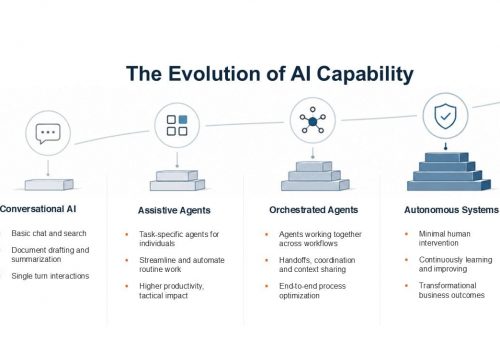
The biggest takeaway from Microsoft Build 2026 is the shift from AI assistants to AI agents. Microsoft’s vision is clear: AI is moving beyond helping employees complete tasks and toward autonomously executing work within defined guardrails.

As Glenn Kemp, Senior Director of Intelligence Solutions Group at Convergence Networks, puts it,

“Business leaders should start thinking now about which processes could be influenced by AI and where work can become more efficient. Build doesn’t mean all of these capabilities are fully here today, but it signals what the coming year will look like as developers around the world become proficient in building and deploying these technologies.”

For business leaders, the priority now is preparation. Organizations that invest in strong data governance, clear AI policies, and well-defined automation opportunities will be best positioned to capture the value of this next wave of AI innovation.

Leaders should also begin planning for a future where AI agents may significantly outnumber human users. As agent adoption accelerates, organizations will need strategies not only for security and governance, but also for monitoring usage, controlling costs, and ensuring AI investments continue to deliver measurable business value.

Share:
Keep Reading
Related Posts
Contact Us
Get Started
Contact Our CLIENT
Support Team
Get connected With
Remote Access

To connect, please enter the 6-digit code given to you by your Network Administrator: